Author: suvroc

  • Prompt Engineering for LLMs

    Prompt Engineering for LLMs

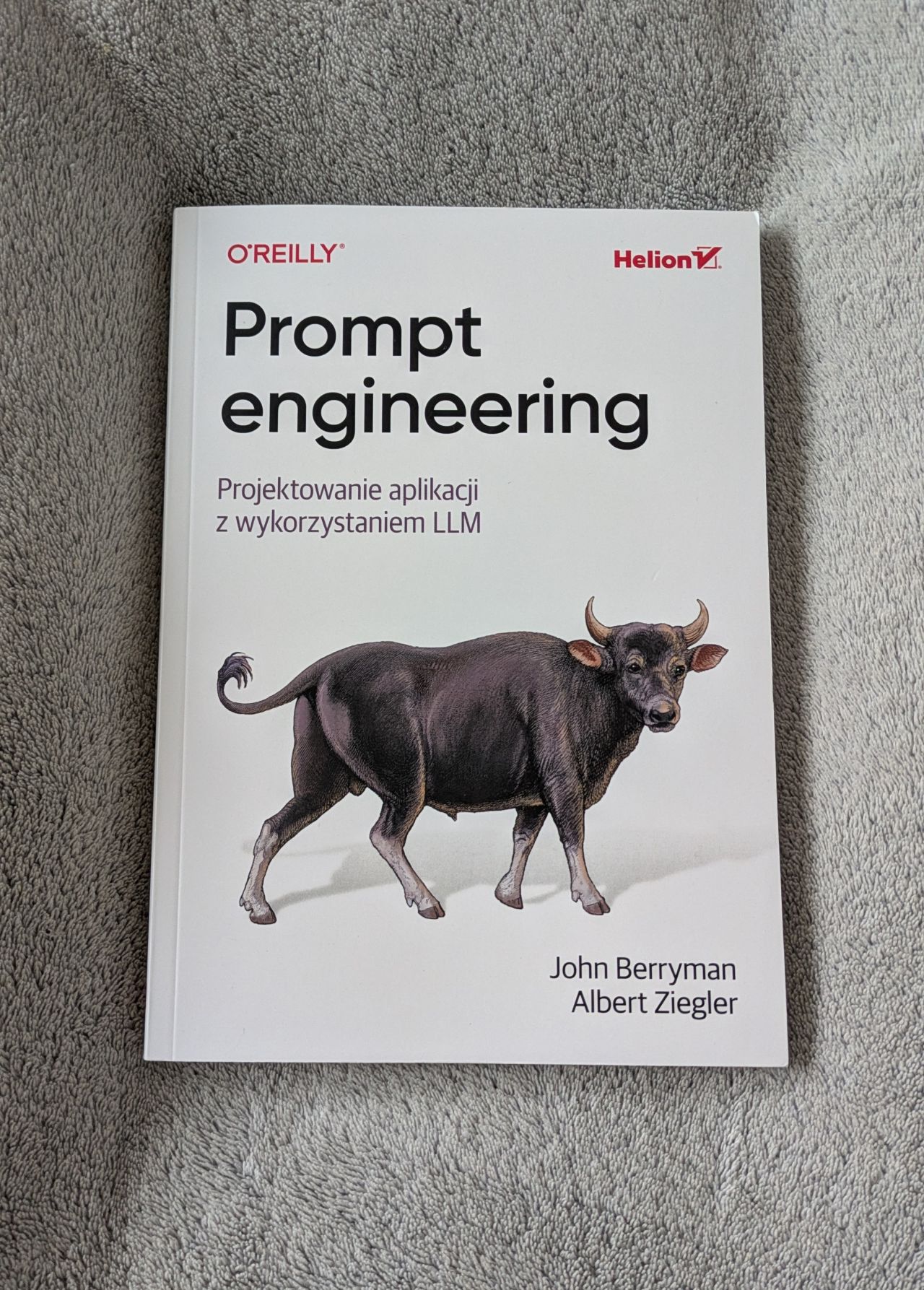
    “Prompt Engineering” is a book that clearly communicates its target audience from the very beginning. And that’s a good thing, because this is not a book for a casual chat user who simply wants to “talk better with AI.” It is primarily aimed at developers and prompt engineers who actually build on top of models and need to understand how they work, their limitations, and best practices in order to consistently create better prompts. A regular user will quickly feel overwhelmed—and understandably so, since part of the material requires solid familiarity with LLMs, including at the API level.

    Let’s start with the less pleasant aspects: there are some language errors, occasionally distracting. Some sections feel overcomplicated and unnecessarily stretched. There are also surprising phrases, such as “LLM common sense,” which do not entirely fit—although I understand the author’s intention.

    However, once you move past these weaker moments, it becomes clear that the authors follow a thoughtful and transparent approach. They discuss various techniques, presenting both their advantages and drawbacks, which helps the reader understand exactly where specific recommendations come from. This builds real awareness and competence—not just “apply this rule,” but why you are applying it.

    A major strength lies in the visual examples—many discussed concepts are supported by graphical representations. And it works: ideas that initially sound abstract suddenly become intuitive. Additionally, there are exercises that force you to think and help structure your knowledge.

    I also appreciate the authors’ approach: before building prompts, you first need to understand how an LLM works. Why it behaves the way it does. Where incorrect answers come from. How tokenization connects to prompt precision. It may sound academic, but in practice it significantly improves later prompt work. The long introduction may feel overwhelming at first—but I know that pain, as I encounter the same reaction in my own training sessions.

    Some elements are genuinely fresh—for example, dynamic construction of system prompts. Honestly, I have not seen this framed in quite this way in other publications.

    A big plus for the research references, which allow readers to verify sources and dive deeper into specific topics.

    Unfortunately, parts of the book are already outdated. There is a strong focus on GPT-3, so some details are no longer current. You will find recommendations that no longer make sense today (e.g., regarding “echo”). On the other hand, this also highlights which concepts have proven timeless. For instance, while the description of tool calling does not mention MCP, it explains the underlying protocol mechanics quite accurately. So even though the book refers to older technologies, it does not lose its practical relevance.

    One final observation: many introduced terms initially sound unfamiliar, but this is largely due to the Polish translation. The English equivalents feel much more natural.

    Summary

    It is an uneven book—sometimes overly detailed and stretched—but at the same time full of concrete, practical, and well-explained guidance. If you build prompts professionally, it will give you solid foundations. If you use LLMs occasionally, this is not the book for you. For engineers, however—it is worth it.

  • AI Engineering. Building Applications with Foundation Models

    AI Engineering. Building Applications with Foundation Models

    “AI Engineering” is a book that combines technical precision with a practical approach to implementing artificial intelligence in organizations. The author doesn’t just describe processes—she defines them. This is not another book about AI trends, but a guide to the real mechanisms that turn a concept into a working system.

    Particular recognition is due to its comprehensive approach to AI implementation in companies. The book demonstrates how many dimensions are involved in the decision to integrate AI—from technical aspects, through organizational ones, to strategic and financial considerations. It reflects a deep understanding that AI is not just a technology, but a tool for building competitive advantage—and that every advantage comes at a cost.

    One of the book’s strengths is that it is “actionable.” It is difficult to assess whether the proposed processes are the best possible ones, but outlining them alone provides enormous value. They offer a starting point—especially for those who want to approach AI implementation in a structured way rather than navigating it blindly.

    The author does not shy away from details and complexity. She presents multiple perspectives and scenarios, at times almost too meticulously. In practice, however, this is an advantage—even if not every element will be relevant to everyone, the richness of examples and threads makes the book worth revisiting, depending on current challenges.

    For me, as someone who delivers AI training, this book was a source of inspiration and concrete examples. Many of the described cases can be immediately transferred into educational or project contexts.

    In terms of style, the book is surprisingly engaging. The chapters draw the reader in thanks to numerous references and concise summaries. The author manages to capture in just a few pages what other publications stretch across hundreds.

    There are moments when the narrative shifts from broader topics into highly technical or mathematical territory—which may be challenging for less technical readers. This is definitely not a “one-evening” read. It requires focus and reflection, but rewards the effort with substantial depth.

    Special recognition also goes to the transparency of sources—almost every claim is supported by research, links, or materials for independent verification. This is a very healthy approach, especially at a time when many publications treat AI more as a fashionable topic than as a field grounded in solid knowledge.

    In summary, “AI Engineering” is a book worth returning to. Not only for the knowledge it provides, but for the way of thinking it promotes—helping to connect strategy, technology, and practice into a coherent whole.

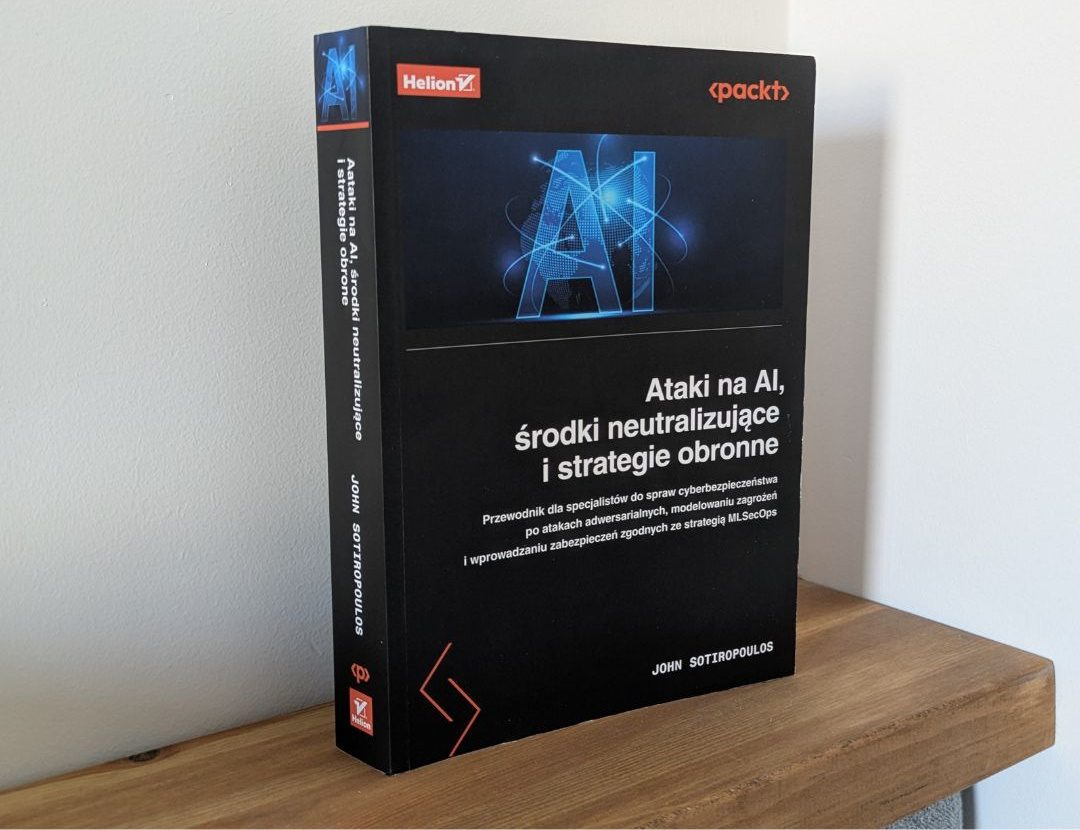
  • Adversarial AI Attacks, Mitigations, and Defense Strategies – book review

    Adversarial AI Attacks, Mitigations, and Defense Strategies – book review

    The book Adversarial AI Attacks is unusual.

    On the one hand, it can genuinely put you off while reading it, and yet I kept wanting to come back to it. It’s not Stockholm syndrome, but rather the real value it carries. But let’s get to the point.

    At the beginning, we are met with an introduction, and it is quite strange. On the one hand, it introduces the topic of AI, but it does so in a very condensed, slogan-like manner. It feels as if it was written exclusively for people who are already very familiar with these concepts. At times, it resembles a conversation with a friend who wants to show off how many complex terms they know.

    Another distinctive feature of the book appears here as well: the translation of technical terms into Polish. Initially, this is handled quite reasonably. Polish equivalents are provided alongside the original English terms. However, later in the book, only the Polish names are used, which makes reading more difficult, as it requires constantly recalling their English origins.

    It is clear that the book was written by a highly technical person. It is not an easy read, yet despite that, I still felt compelled to return to it.

    There are very few books on the market that focus on more sophisticated attacks on AI. Most publications stop at simpler threats, such as Prompt Injection or Unbounded Consumption. And that’s no surprise—it’s easy to compare them to classic attacks like SQL Injection or DoS. This book goes a step further and concentrates on lesser-known, more difficult attacks that often require specialized tools and/or knowledge of advanced mathematics. In this area, it offers an enormous amount of knowledge.

    The structure is fairly systematic—each attack includes a description, its variants, industry examples, and methods for independent replication. Each one is also accompanied by a reference to the original academic research.

    For this reason, I treat this book as a kind of lexicon of AI attacks, built on academic research. It is an excellent reference point—both for learning and for revisiting later when an opportunity arises to apply the described techniques (of course in testing, not in offensive use 😉). That is precisely why I see its schematic nature as an advantage.

    The same applies to the source code—on a first reading, it can be skipped, but during deeper study, it becomes very useful. The downside is that sometimes the sample code is difficult to analyze without the full version available on GitHub. Fortunately, that option exists, so the book excerpts can be treated as commentary on the repository. Unfortunately, the grayscale illustrations instead of color ones are less readable and make understanding more difficult.

    In summary: “Adversarial AI Attacks” is a highly valuable book, though written in a demanding way. It requires considerable effort and has a high entry threshold—definitely intended for readers who already have solid knowledge of AI. In return, however, it delivers an enormous amount of insight. It is hard to find another book in this field so densely packed with substantive material.

  • The Developer’s Playbook for Large Language Model Security – review

    The Developer’s Playbook for Large Language Model Security – review

    This book fits perfectly into the field of AI Security, which I work with on a daily basis. That’s why I had my eye on it for quite some time. I had heard mostly positive opinions about it. In my view, there still aren’t many titles on the market that cover this topic in a structured, example-based, and in-depth way. The subject is the book named The Developer’s Playbook for Large Language Model Security – review is just below.

    For a long time, I had been planning to order the original version. But when I noticed that a Polish edition had been released, I decided to give it a shot and see if the positive reviews held true.

    So, what is the book about? The Developer’s Playbook for Large Language Model Security is an ambitious attempt to systematize the risks, threats, and protection techniques for systems based on large language models (LLMs). The author takes on a tough challenge — describing a fast-evolving and still relatively new domain — in a methodical way, rich with examples and practical references.

    One of the book’s strongest aspects is the abundance of vivid examples that help explain attack mechanisms and possible countermeasures. The style is reminiscent of Adam Shostack’s iconic book on threat modeling — both authors dissect their topic thoroughly, illustrating each threat class with specific, concrete cases. This is definitely a major strength of the book.

    The book doesn’t try to be “cool” — but it’s solid. It reads more like a well-crafted textbook than a popular science title. However, thanks to its clear and practical examples, it doesn’t feel tedious. Reading it feels like reviewing a teammate’s notes — the kind who sketches the entire threat landscape on a whiteboard, then adds two real-world examples and a counterexample so you fully understand where something doesn’t apply.

    I rate the book very positively. The subsequent chapters turned out to be highly educational and inspiring. I found myself jotting down new techniques every few pages — ideas I could immediately apply in my daily work.

    Is this book for everyone?

    No. And that’s a good thing. It’s a book for people who know that “prompt injection” is just the beginning of the problem list, not the end. It’s for those who want to learn to think about LLM systems as real, complex applications with vulnerabilities, attacks, and deployment context.

    Would I recommend it?

    Absolutely.

    This book does an excellent job of organizing the current knowledge on AI security, particularly when it comes to integrating LLMs with broader IT systems.

    The book The Developer’s Playbook for Large Language Model Security – review is very positive. I wish we have more books like this in AI Security area.

  • AI Coding Assistants security

    AI Coding Assistants security

    I think everyone has already heard about it, and most of us have even tried it by now. What’s more, after talking to various people, many people have started to work this way simply on a daily basis, and it helps them very well.

    What is it?

    AI Coding Assistants Security. Today we will combine this with Vibe Coding and look at the security of this approach to coding.

    Writing code together with AI assistants is becoming more and more fun. From generating simple code elements based on comments, to generating entire functionalities. We are slowly starting to move from thinking about writing code to thinking more holistically about creating functions and systems.

    This is a very positive change. We now need to focus more on high-level and architectural thinking, rather than tediously writing line after line of classes and properties.

    Today, with the current tools, we really have tremendous possibilities. Both the ability to choose from many different tools such as GitHub Copilot, Cursor, Windsurf. Each of them also has different capabilities to support the creation of systems such as Background Agents in Cursor.

    But most of all, AI Assistants give us the ability to quickly modify code, as well as quickly create entire applications. It’s not always accurate, but it’s great for prototyping different kinds of applications, which you can then further develop yourself or with the help of AI Assistants.

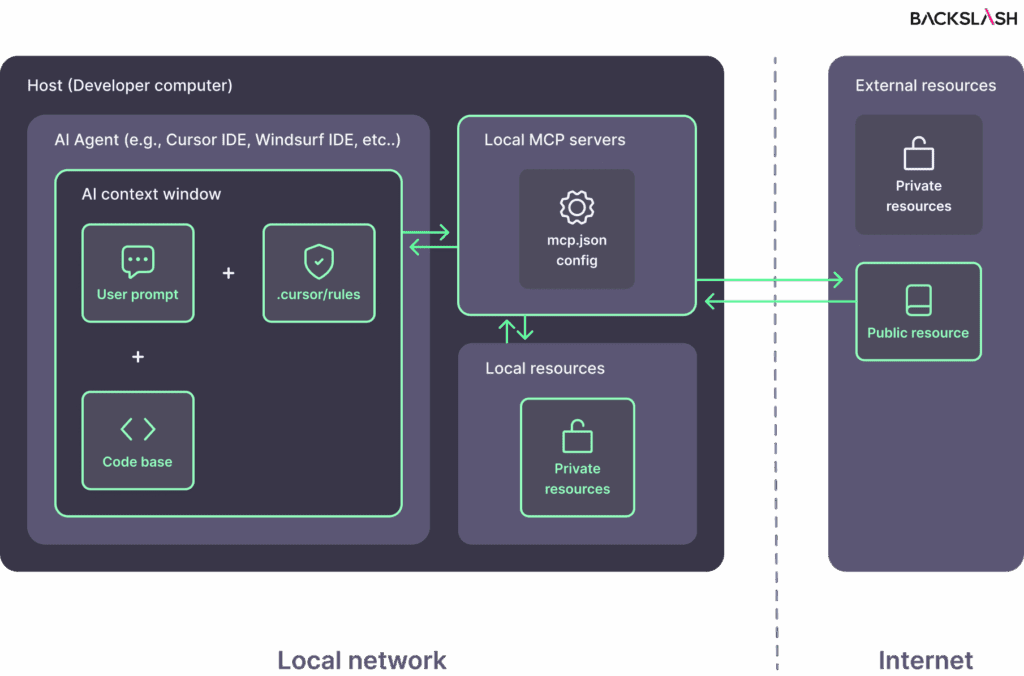
    This is how the basic architecture model of using AI Assistants looks like.

    We have:

    • codebase – the code of our application
    • assistant rules – a file of common rules used during each generation
    • prompt – queries to the model
    • MCP servers and external resources – which can process data or perform actions outside the AI models (see more)

    Does this mean that from now on, anyone can create an application?

    Yes

    But can anyone create any application?

    Not really anymore.

    And are such apps ready to be used by users?

    Definitely not.

    That’s when the AI coding assistants security comes into the stage.

    Threats of AI Assistants

    Generating erroneous code

    A major drawback of AI Assistants is their literalism. When we don’t specify in the instructions exactly what is to be written, the model can come up with something of its own. Something that won’t quite work for us. For example, it will make a CSS style error that will cause the page to look strange. This doesn’t sound particularly dangerous. Sooner or later we will detect it.

    However, it may turn out that the AI Assistant will also generate an error in the application logic. This too can be detected during testing.

    And what if it generates an error in the logic for logging into the system, or uses dangerous algorithms in the code. After all, he was learning on code from GitHub, not always of the best quality and latest.


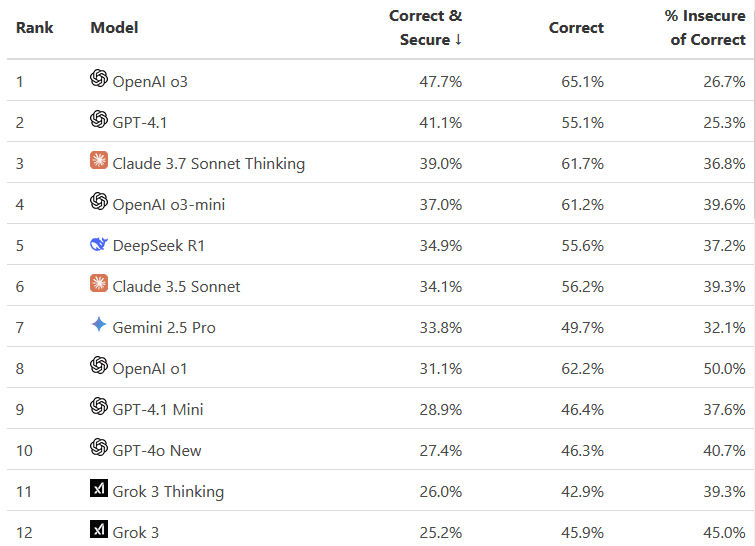
    In the following study (dated February 2025) of various models, you can see what percentage of the code generated by a given model was safe, and what percentage contained unsafe insertions.

    https://baxbench.com/ (February 2025)

    Important annotation

    The models are only prompted to complete the coding task. The prompt contains no security-specific instructions, reflecting a realistic interaction with a developer that does not make explicit security considerations.

    The AI model itself can also generate very problematic code completely by accident. A good example is LLMs generating non-existent libraries. This is known as slopsquatting

    When AI generates a reference to a library that doesn’t exist, an attacker can create one, duplicating the original one, and so take over access to the application code, executing whatever he wants in it.

    Generating malicious code

    The headline sounds similar, but there is a rather significant difference. In the previous case, it was the AI model that made the error, in the second it is someone who forces it. Still, both types of errors can be equally serious, but in this case it is a deliberate attack on the system.

    How can this take place?

    For example, using malicious instructions sewn into MDC (common configuration for AI assistants) files.

    A more sophisticated way is to inject Prompt Injection into the model via MCP servers. Through this, in a rather unnoticed way, someone can influence the way code is generated.

    Data leakage

    Another serious risk is that by working with code and sending it to the AI model, there is the possibility of leaking our source code. This alone may be problematic for us, but it can become much more dangerous if our code contains sensitive data or secrets used in the system. Then the problem gets much more serious. Such leaks can happen directly through the AI model or through various MCP servers.

    How to deal with it?

    Secure code in the repository

    The basis of secure code generation is the proper formulation of prompts. However, let’s be honest. Developers do not always keep this in mind, and it is difficult to add such annotations to every even minor prompt. That’s why MDC’s shared prompt configuration files were created. They allow us to create a prompt element that is used in every query. We can put their instructions for ensuring the appropriate level of AI coding assistants security. Because as we said – AI is literal – if we don’t tell it about something, it won’t do it. As inspiration, I recommend examples of MDC files in various projects.

    Another method to ensure that the generated code is secure is a tight Pull Request policy. We need to make sure that the code cannot be merged into the branch from which the application is built for production without proper human verification.

    In general, code generated by the AI Assistant should meet at least as stringent security rules as human-generated code. Both sources can make mistakes.

    Code security

    When it comes to ensuring the security of our code as vital data, it’s worth starting with the basics. Let’s use only trusted AI Assistants, through trusted plugins, to minimize the chances of leakage.

    Some cloud model providers also allow us to declare a request not to use our data to train models. It’s worth keeping this in mind, as there have already been more than once situations where a generic model could get at data from a training collection (see the Samsung case).

    I hope that this brief summary of threats and ways to protect against them will help you create secure code in the most effective way.

    Because it’s a shame to waste time writing the same thing a hundred times, you can do it faster, but not at the cost of security.

    Sources:

    https://threats.backslash.security

    https://cloudsecurityalliance.org/blog/2025/04/09/secure-vibe-coding-guide#

  • MCP Security (Model Context Protocol) – short summary

    MCP Security (Model Context Protocol) – short summary

    Introduction

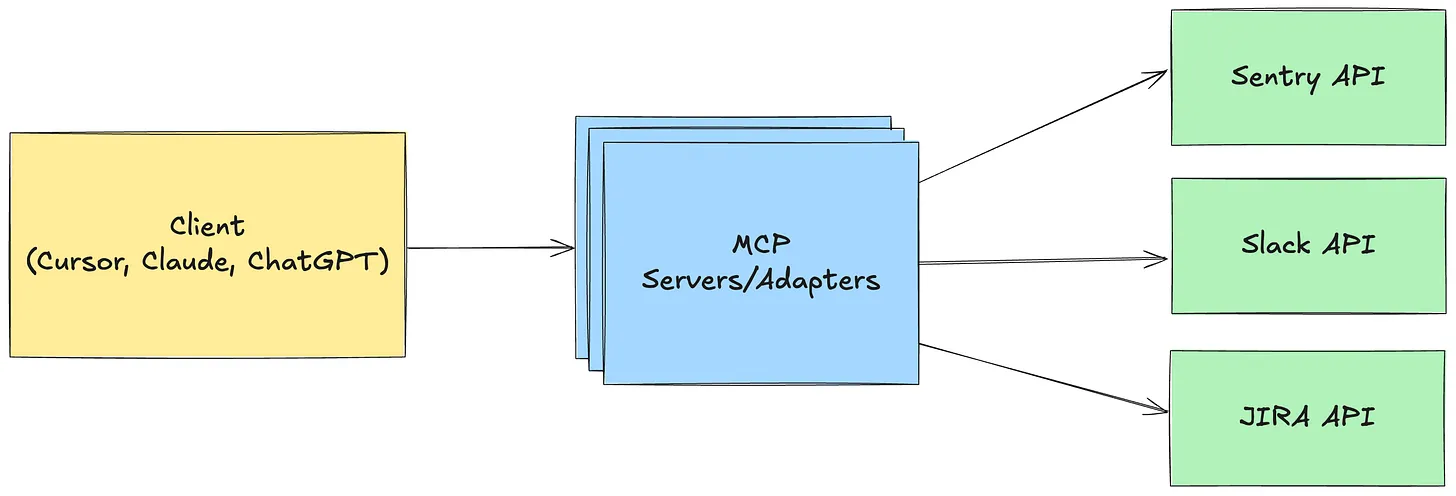
    MCP (Model Context Protocol) is the recently announced standardized way for AI models to communicate with the outside world, announced by Claude. Specifically, in the context of accessing data from the outside world.

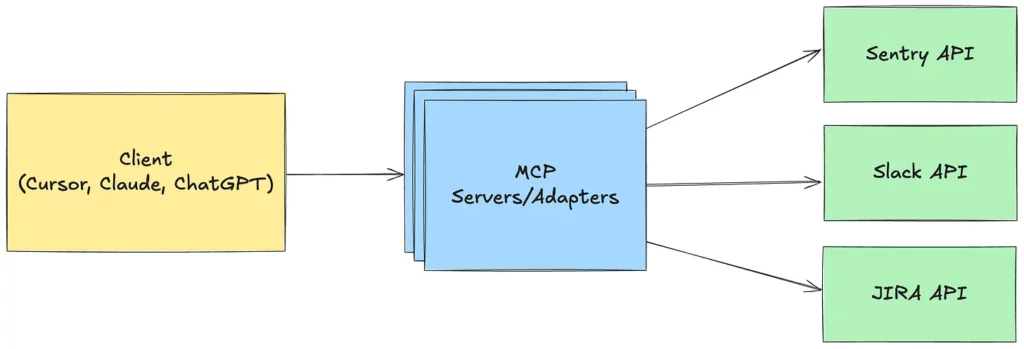
    Source: https://substackcdn.com/image/fetch/w_1456,c_limit,f_webp,q_auto:good,fl_progressive:steep/https%3A%2F%2Fsubstack-post-media.s3.amazonaws.com%2Fpublic%2Fimages%2F6de5b04a-5e6c-47cf-a81e-e332dd3570df_2906x990.png

    The above architecture shows that it’s an interface that is able to connect various kinds of APIs using a language that is familiar to AI models. It seems to be just a minor standardization, but it has triggered a creation of multiple new servers for more or less popular services. It’s easy enough that none of the big players want to be left behind, and everyone wants to provide an interface for contact between AI and their system.

    You can see how popular it is when you look at the number of new implementations of this protocol.

    https://github.com/punkpeye/awesome-mcp-servers

    https://mcpservers.org

    https://mcp.ing/explore

    https://mcpverse.dev

    Let’s start by taking a closer look at what MCP (Model Context Protocol) is.

    We have to start with the official MCP (Model Context Protocol) specification

    https://modelcontextprotocol.io/specification

    A short and simple explanation of what MCP is:

    https://read.highgrowthengineer.com/p/mcps-simply-explained

    Also, an interesting and more in-depth description of the protocol itself (MCP), as well as the possibilities for its use and potential future expansion:

    https://a16z.com/a-deep-dive-into-mcp-and-the-future-of-ai-tooling

    The big advantage of this new protocol, as well as its rapid adoption, is that it allows AI to use specialized tools to increase its efficiency. A good example of this is reverse engineering. So far, LLMs have had to rely on their own abilities to do this and analyze code purely at the language layer. With interfaces such as GhidraMCP (https://github.com/LaurieWired/GhidraMCP), it can take advantage of mature solutions and process already preprocessed data.

    MCP and security

    The topic of MCP security can be summarized up in one sentence:

    The article sums it up nicely:

    https://elenacross7.medium.com/️-the-s-in-mcp-stands-for-security-91407b33ed6b

    Tool Poisoning Attack threat description

    https://invariantlabs.ai/blog/mcp-security-notification-tool-poisoning-attacks

    You can also see the vulnerabilities that can exist in the MCP code by seeing the examples.

    Intentionally Vulnerable MCP Server (Built to test SQL Injection (SQLi) and Remote Code Execution (RCE) vulnerabilities via FastAPI, JSON-RPC, and LLM-based decision logic.)

    https://github.com/evrenyal/mcpsecurity

    https://github.com/harishsg993010/damn-vulnerable-MCP-server

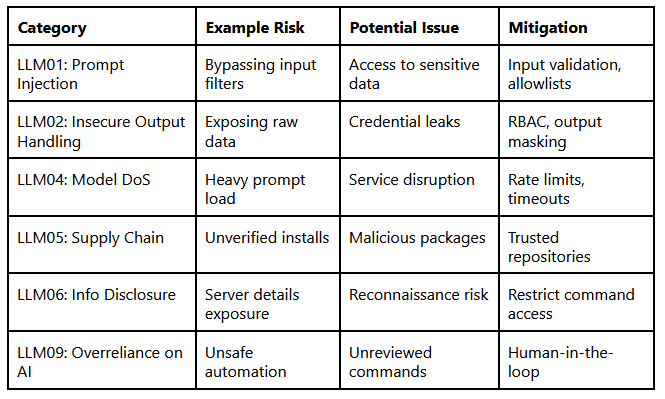
    A very structured overview of MCP server threats with examples of problematic calls.

    Source: https://evren.ninja/mcp-security.html

    Another list of threats related to MCP servers:

    1. Command Injection Vulnerabilities – running malicious code passed in parameters.
    2. Tool Poisoning Attacks – injecting malicious instructions into the server’s action description.
    3. The Rug Pull: Silent Redefinition – the ability to substitute server behavior.
    4. Cross-Server Tool Shadowing – replacing the results of one MCP by another.
    5. Context Leakage Risks – a long-held session can leak sensitive information.
    6. Prompt Injection – overwriting the default behavior of a prompt by a response from an MCP.
    7. Memory Poisoning and Context Corruption – corruption of session context through a malicious response from MCP.

    https://elenacross7.medium.com/️-the-s-in-mcp-stands-for-security-91407b33ed6b

    https://invariantlabs.ai/blog/mcp-security-notification-tool-poisoning-attacks

    https://medium.com/@sebuzdugan/understanding-the-security-implications-of-using-mcp-9bd3323ad42d

    Here instead we have a very insightful analysis of MCP (Model Context Protocol) threats

    1. Name Collision – impersonation of trusted servers.
    2. Installer Spoofing – injection of an infected server.
    3. Code Injection/Backdoor – malicious code in a server implementation.
    4. Sandbox Escape – exiting a command outside a trusted environment and gaining unauthorized access to the operating system.
    5. Slash Command Overlap – conflict in the names of methods available to AI.

    https://arxiv.org/pdf/2503.23278

    So, how to defend against these threats?

    There are many methods, but they can be summed up to a simple Zero Trust approach and taking care of classic security principles:

    • session management,
    • authentication and authorization,
    • encryption on transit,
    • good monitoring.

    https://medium.com/@sebuzdugan/understanding-the-security-implications-of-using-mcp-9bd3323ad42d

    In addition, we have several security verification tools available.

    Concept of using AI to evaluate MCP servers

    https://github.com/JeredBlu/custom-instructions/blob/main/mcpevaluatorv3.md

    An interesting way to verify publicly available MCP servers from different vendors. It is interesting that we can also use this method to verify the security of other libraries or tools

    https://www.youtube.com/watch?v=LYUDUOevtqk

    MCP server security verification tool

    https://github.com/invariantlabs-ai/mcp-scan

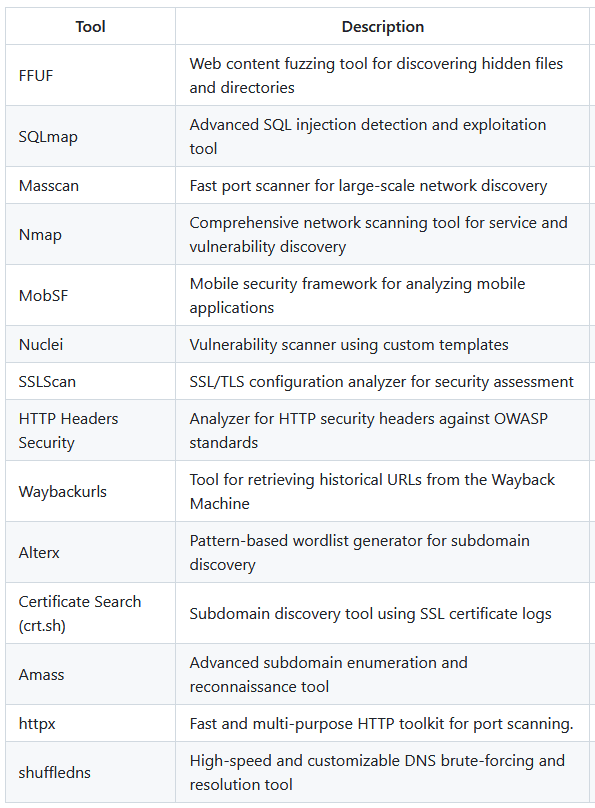
    On the other hand, MCPs can also help us in daily application security.

    Source: https://github.com/cyproxio/mcp-for-security

    Final thoughts

    The big problem with MCP servers is the implementation itself. Especially when it is so easy to create such a server. Even more so in the vibe coding model.

    The protocol itself does not define any security, which can provoke a poor implementation. However, with the right Zero Trust approach from both sides. As a Client, we don’t know what MCP will return and whether it’s secure, and as an MCP Server, we also have to be distrustful of the input.